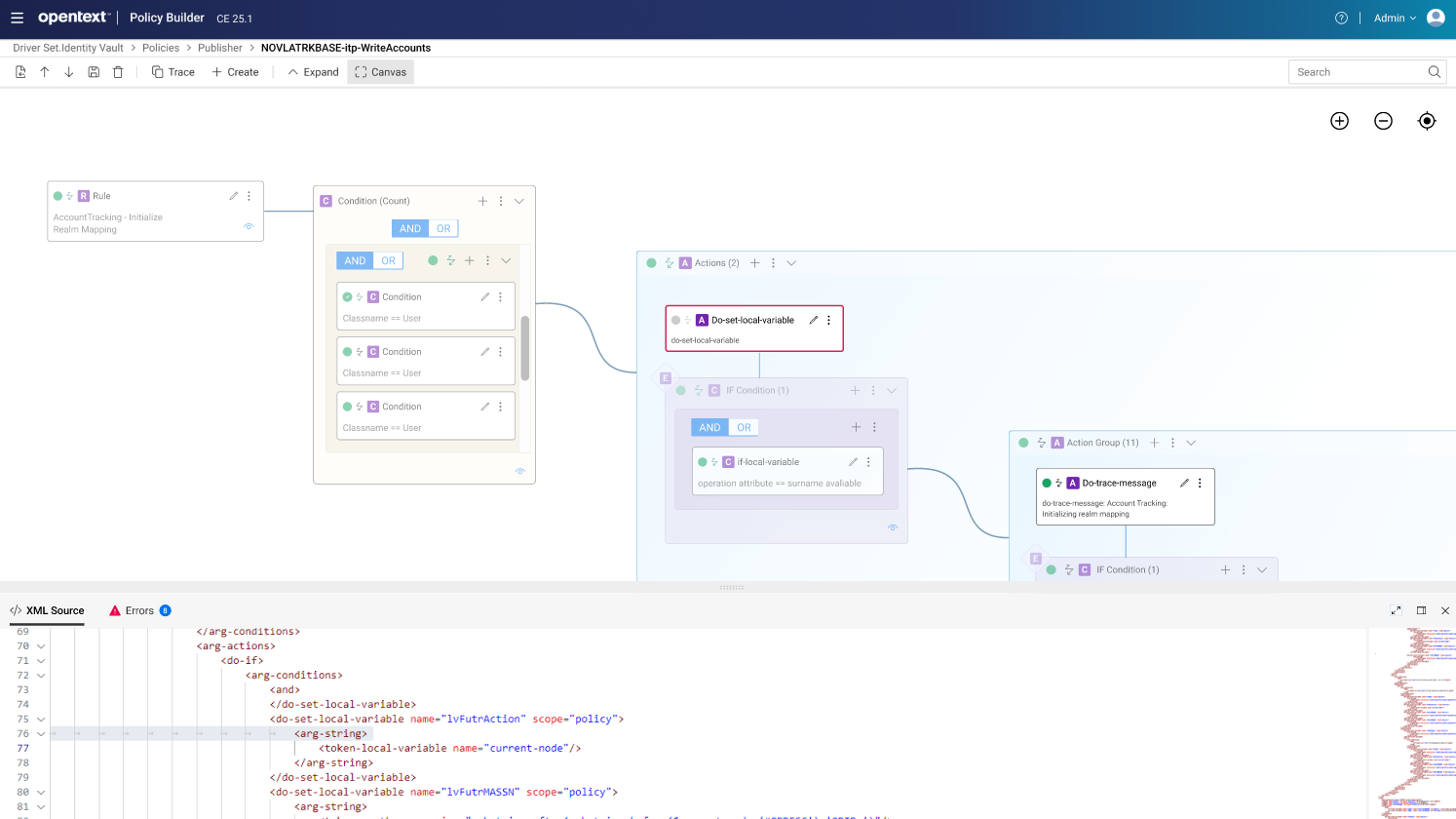
What we inherited
Administrators were navigating XDS structures and raw XML to manage policies — a fragmented, modal-heavy interface that demanded deep technical expertise and blocked self-service. Every change meant consulting support.
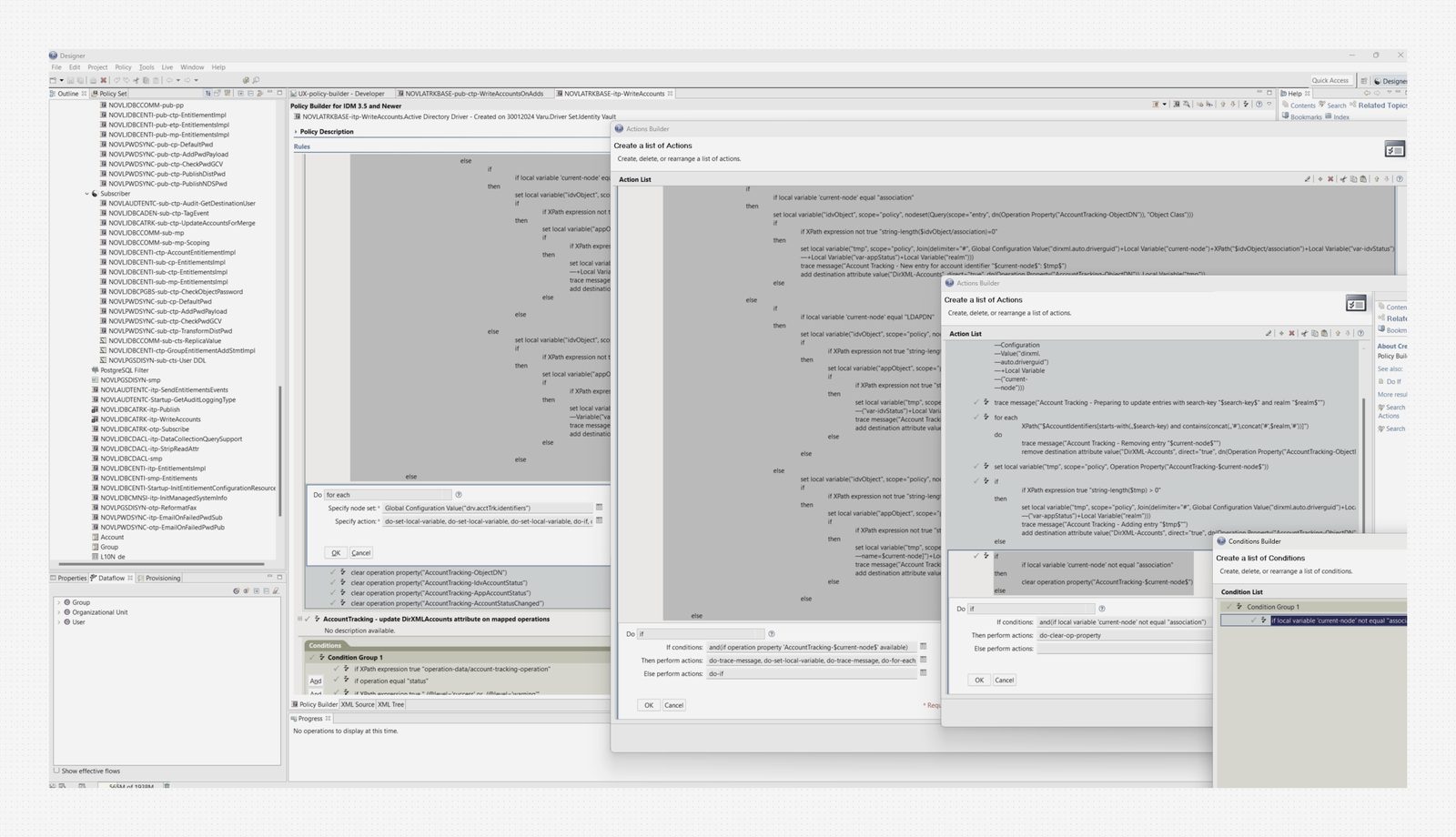
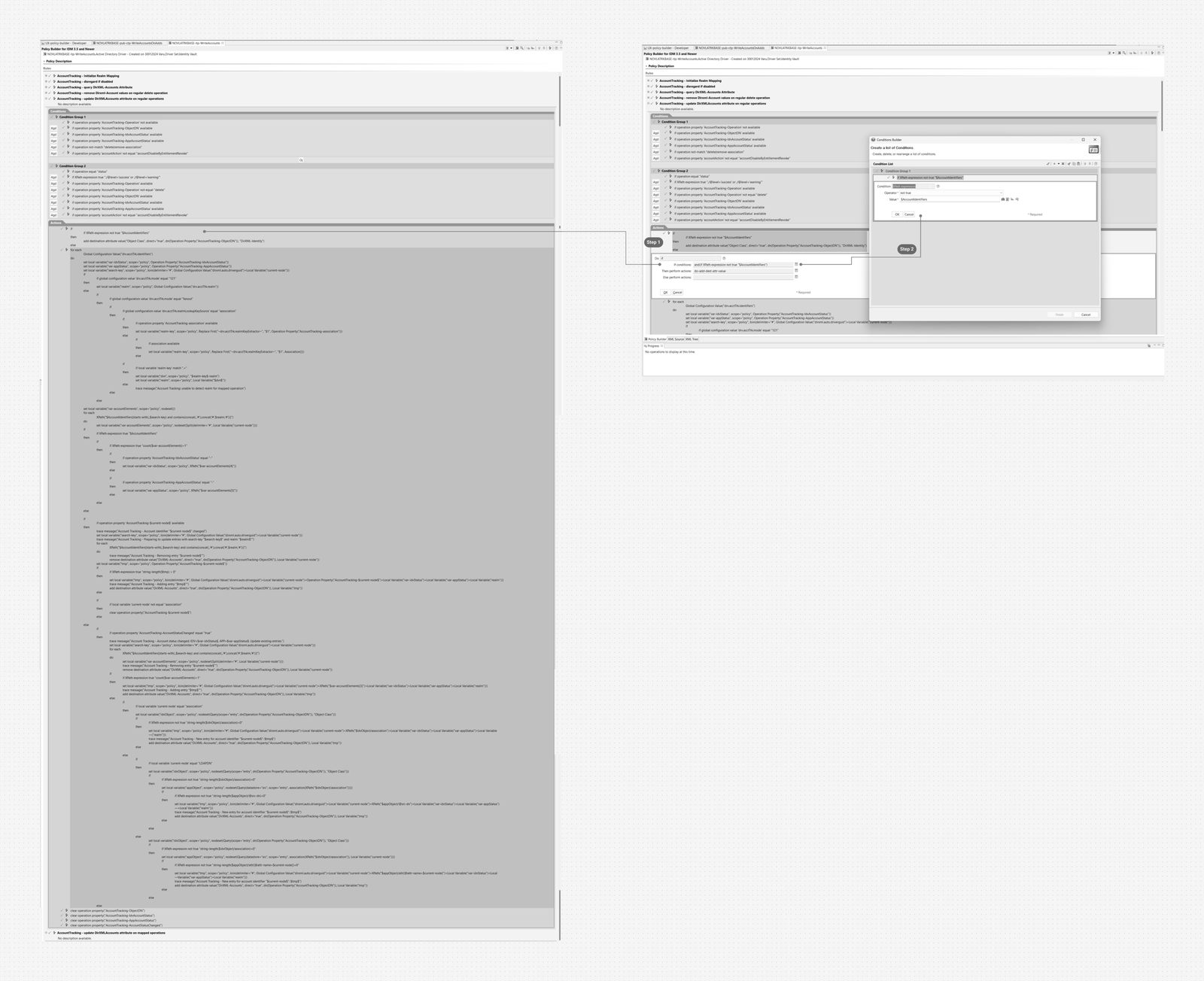
Mapping the real journey
Before sketching anything, I mapped the full lifecycle of a policy administrator — where they got stuck, where they gave up, and where the system forced them to call for help.
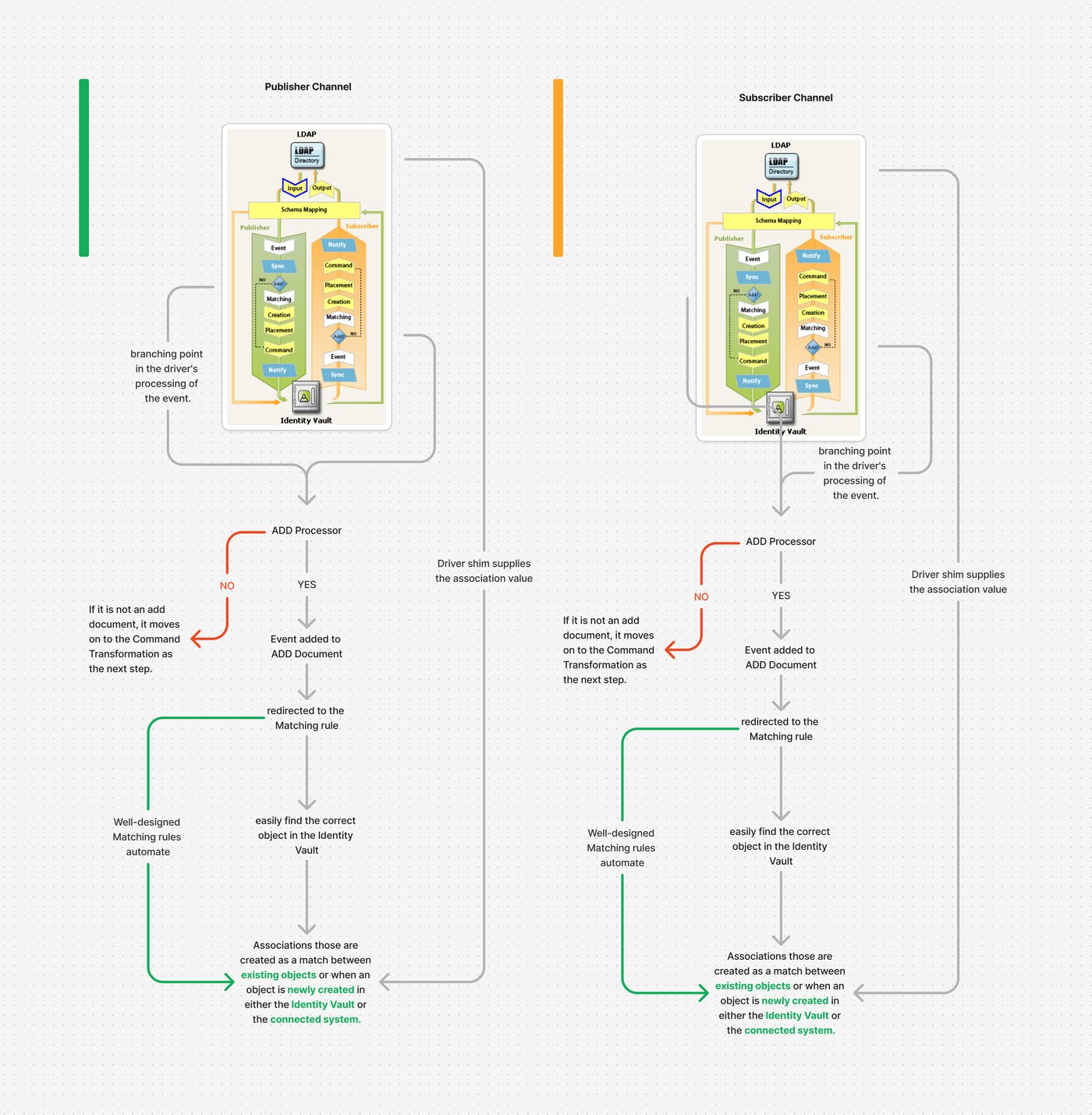
The core tension: power users needed XML access, but the interface forced everyone through it — regardless of skill level.
Who we designed for
Research surfaced a clear primary user — the Application Administrator managing Active Directory Driver policies within NetIQ Identity Manager. Not a casual user: someone who lives in this system daily and feels every rough edge.

IT Operations · Identity Management
XML editor blocks self-service
Editing rules and conditions via the XML editor is cumbersome and relies heavily on consulting support — users cannot make direct edits without external help.
Deep expertise required for every change
Managing existing policies demands technical depth. Errors disrupt synchronization and cause data inconsistencies — the cost of a wrong edit is high.
Multiple modals fragment the workflow
Condition sets span multiple layered modals, adding navigation complexity. Users lose context mid-task and struggle to manage policies end-to-end.
No safe way to compare or iterate
There is no GUI-based view for side-by-side comparison. Rules cannot be easily edited, compared, or updated without creating technical dependencies.
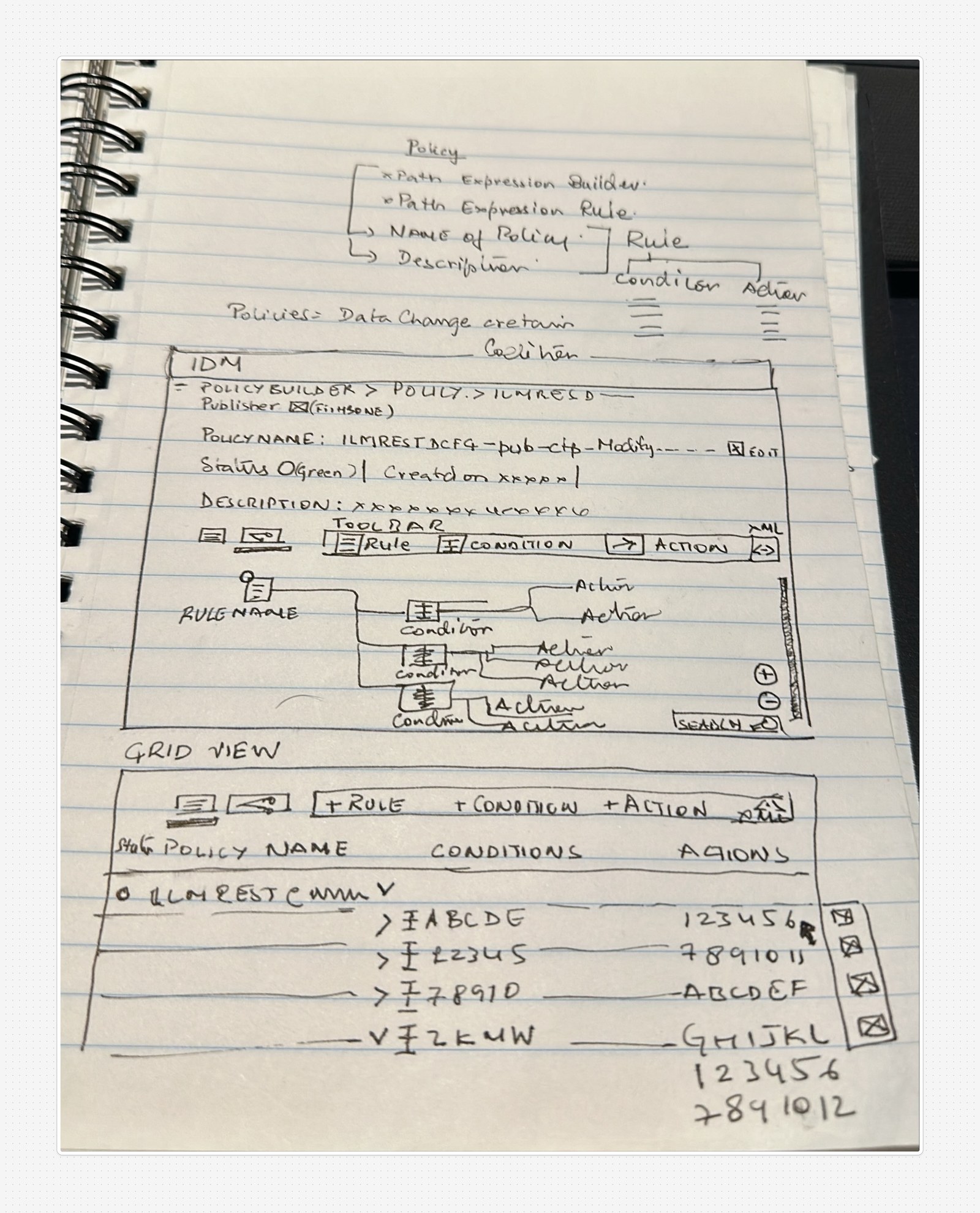
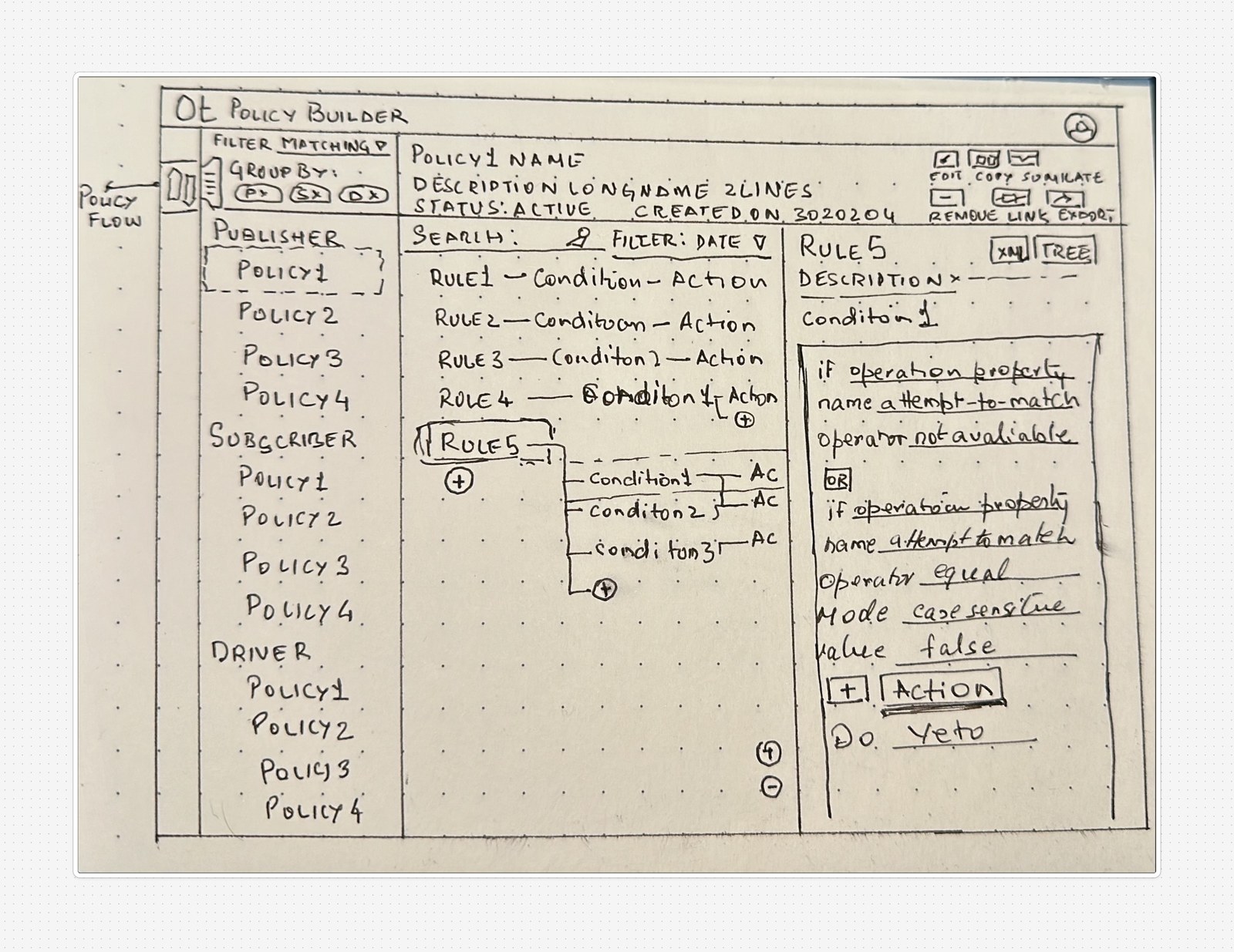
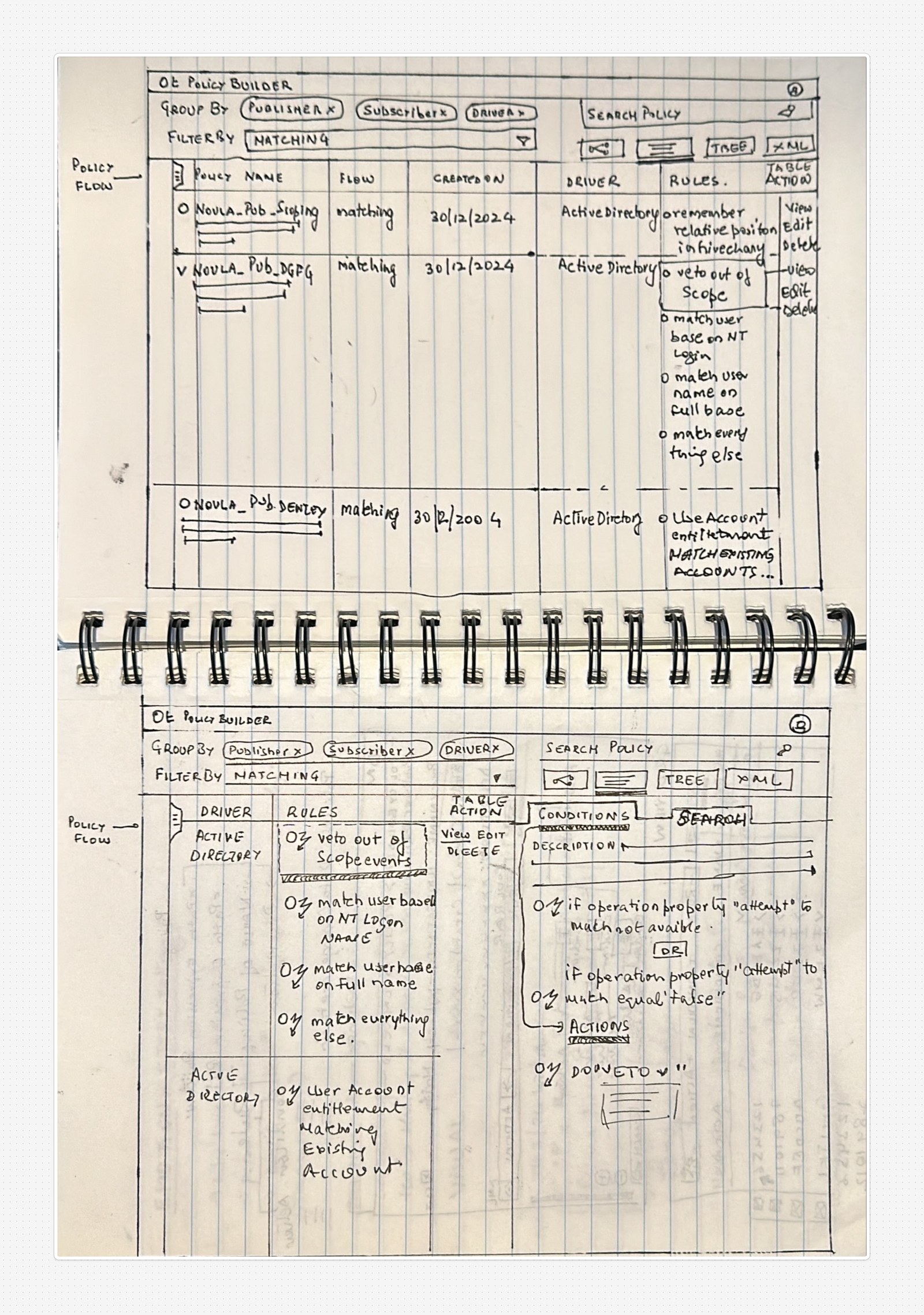
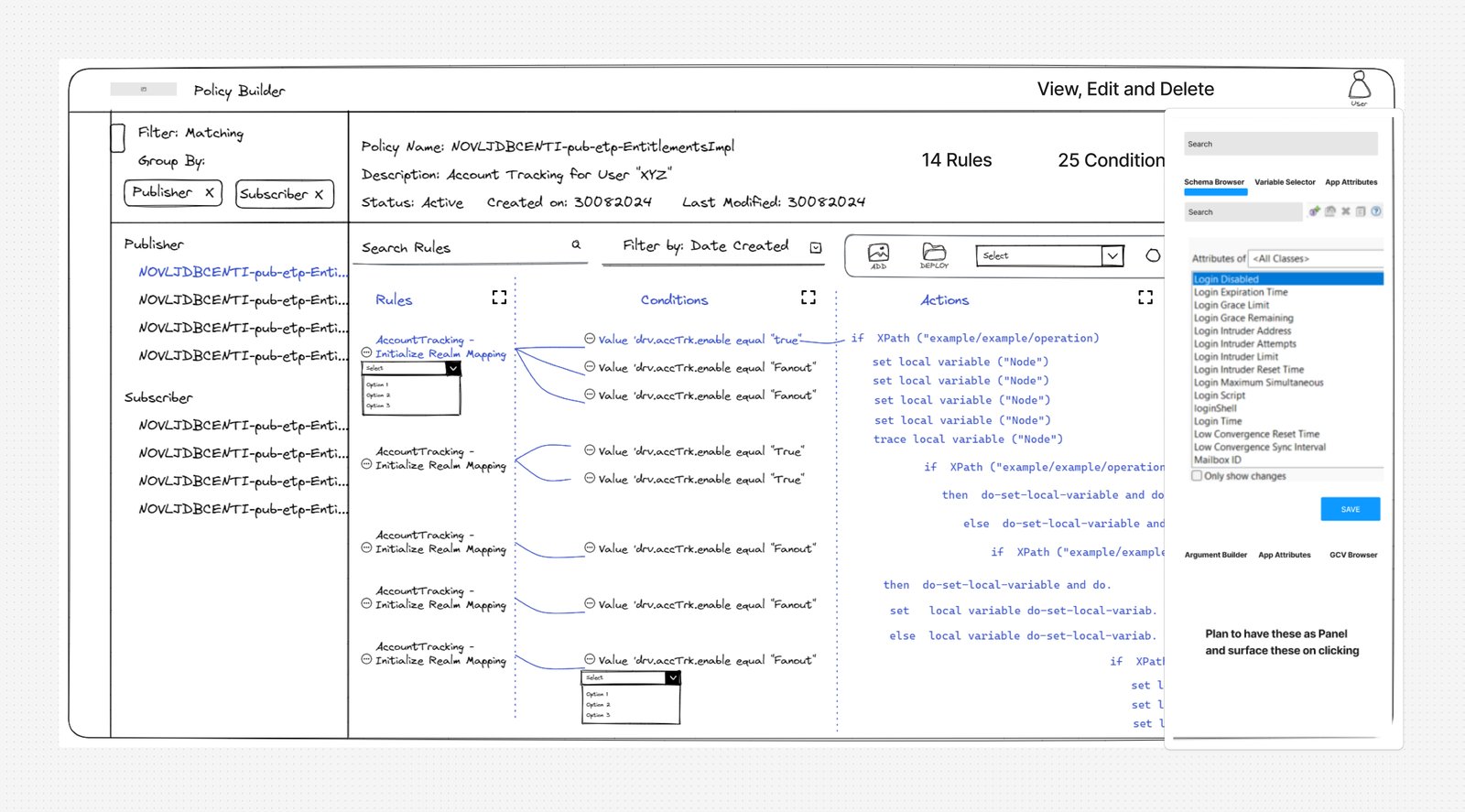
First sketches — thinking out loud
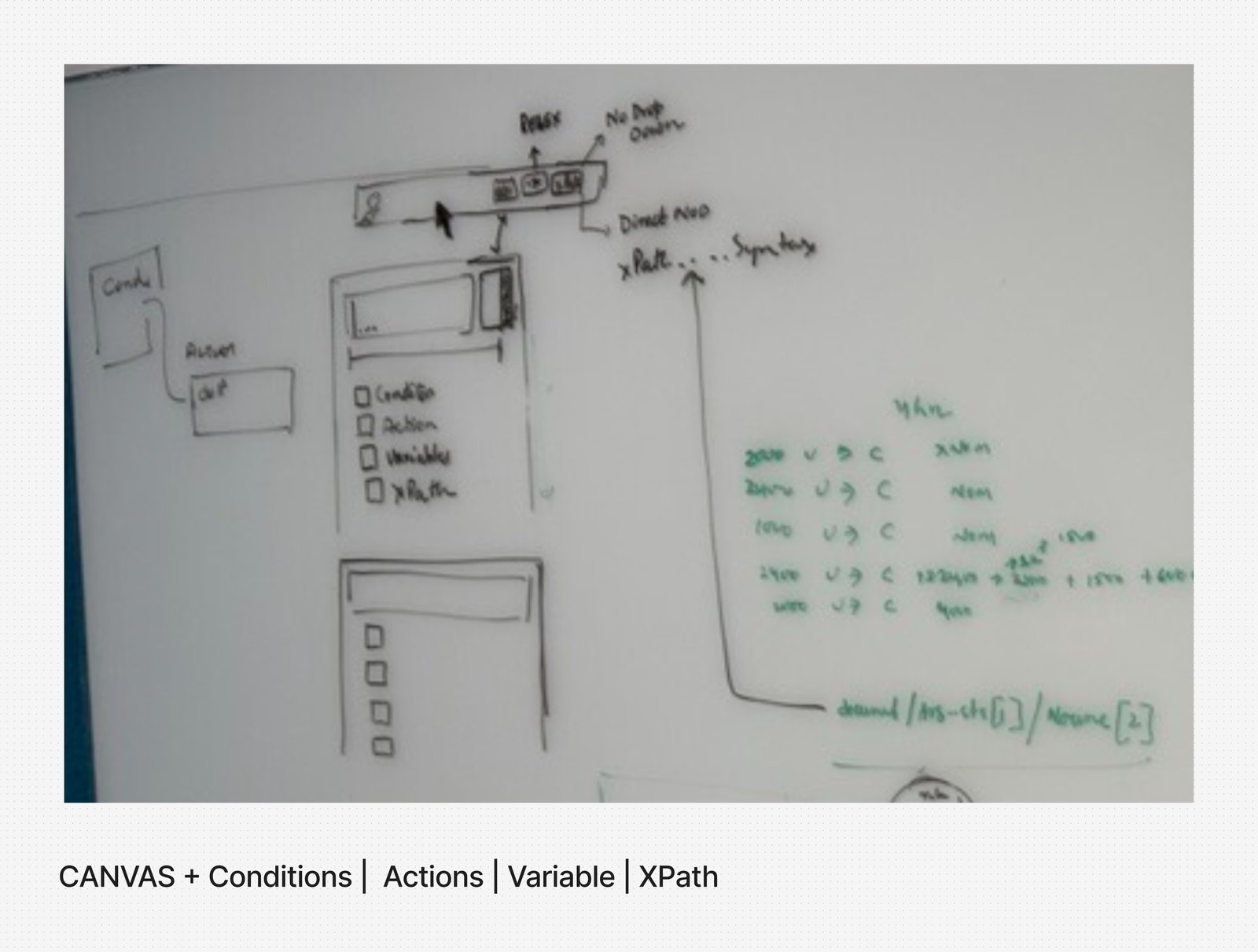
I sketched before touching pixels. These are raw — intentionally. Fast, throwaway thinking to explore the structure of a visual policy canvas before committing to any direction.
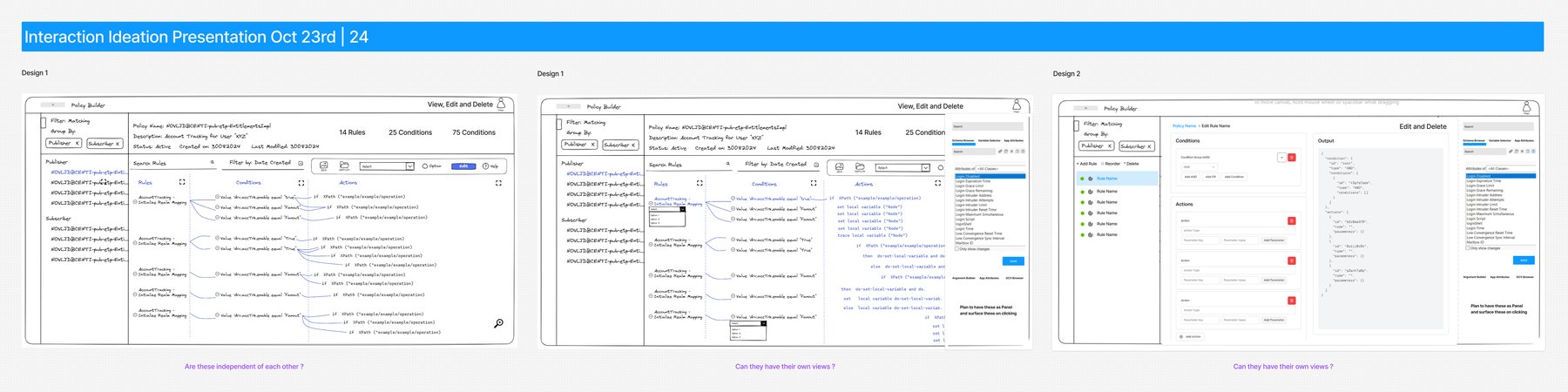
Taking shape — the single pane of glass
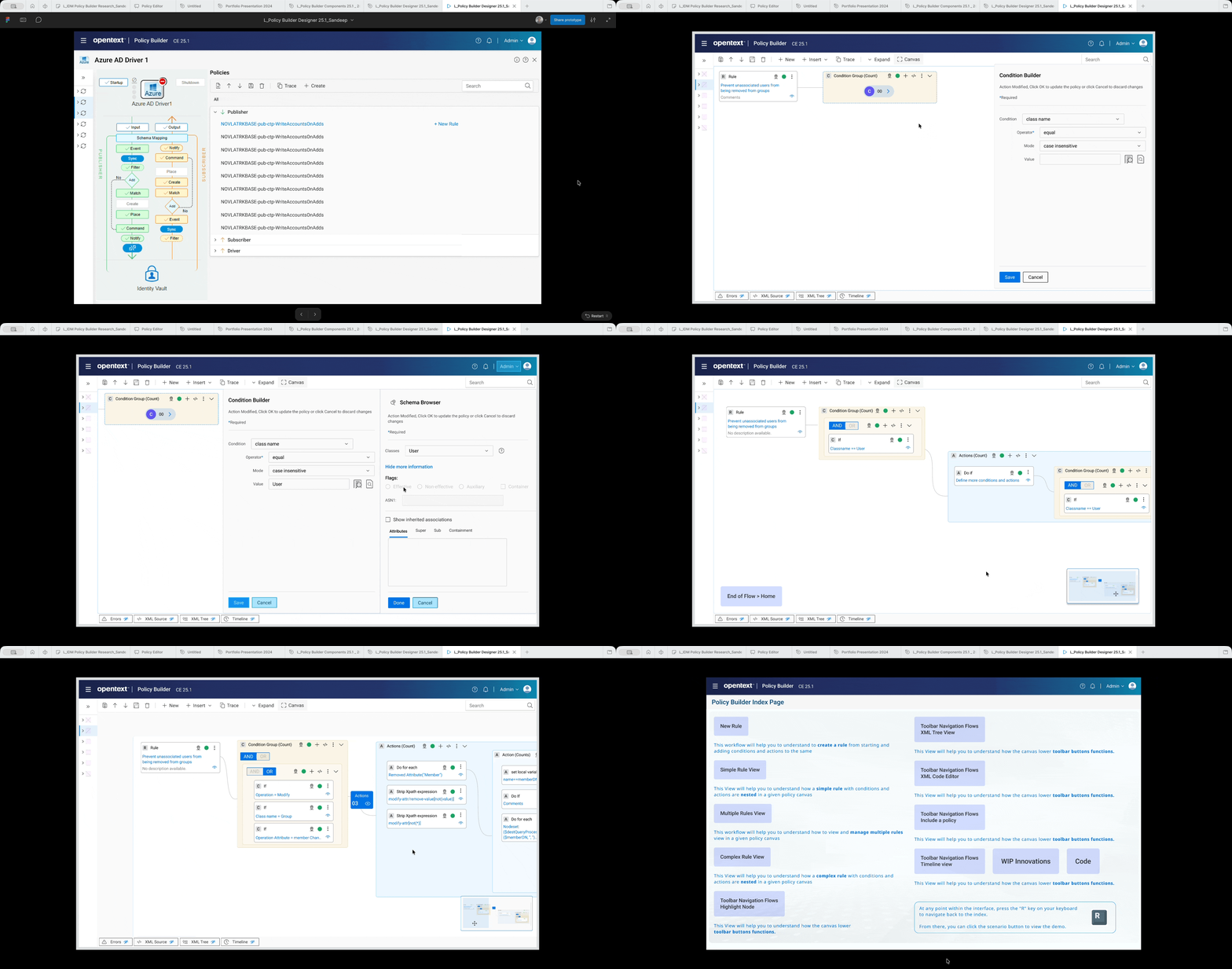
One unified workspace to replace five fragmented screens. The Canvas View emerged as the single pane — rules, conditions, and actions in one place.
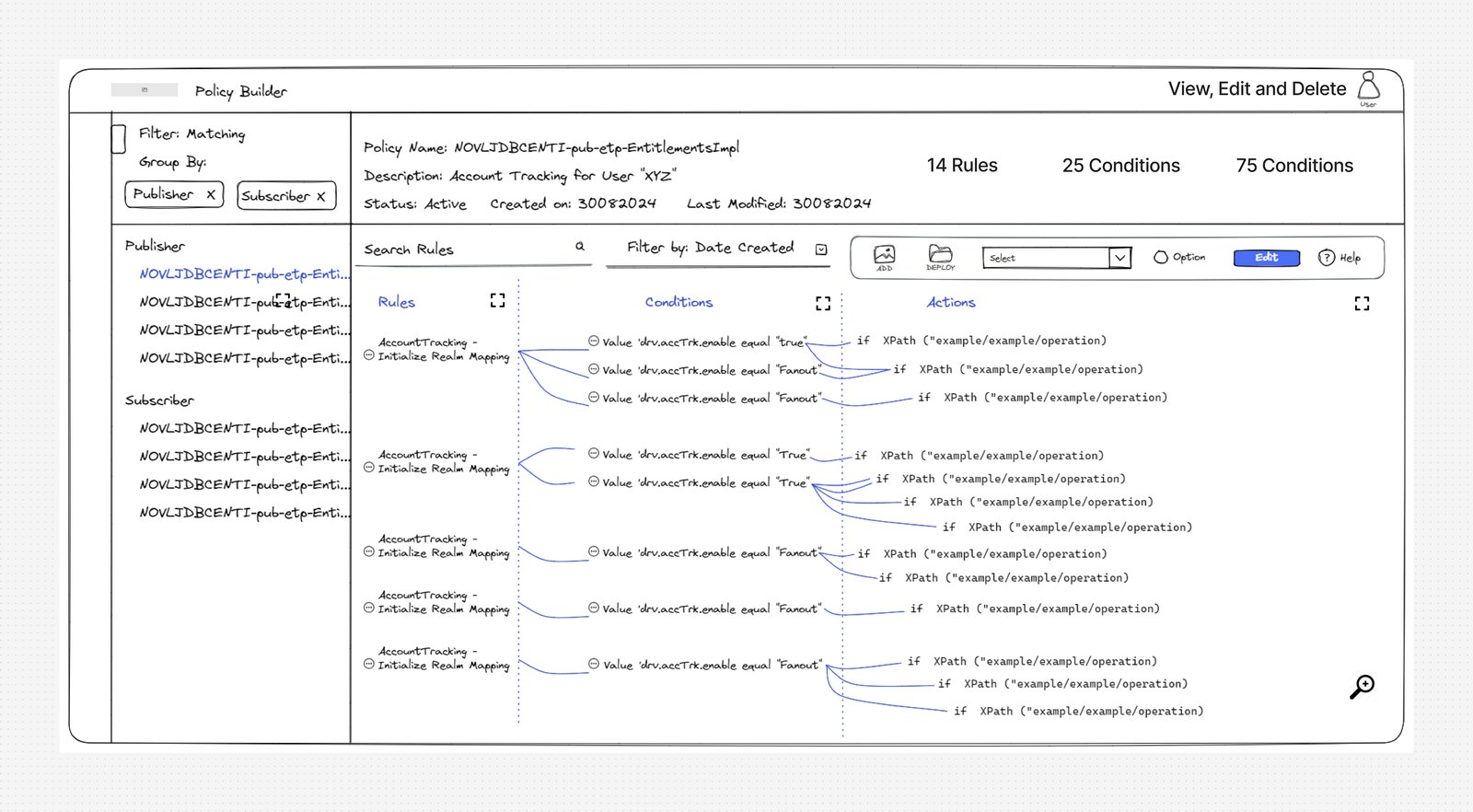
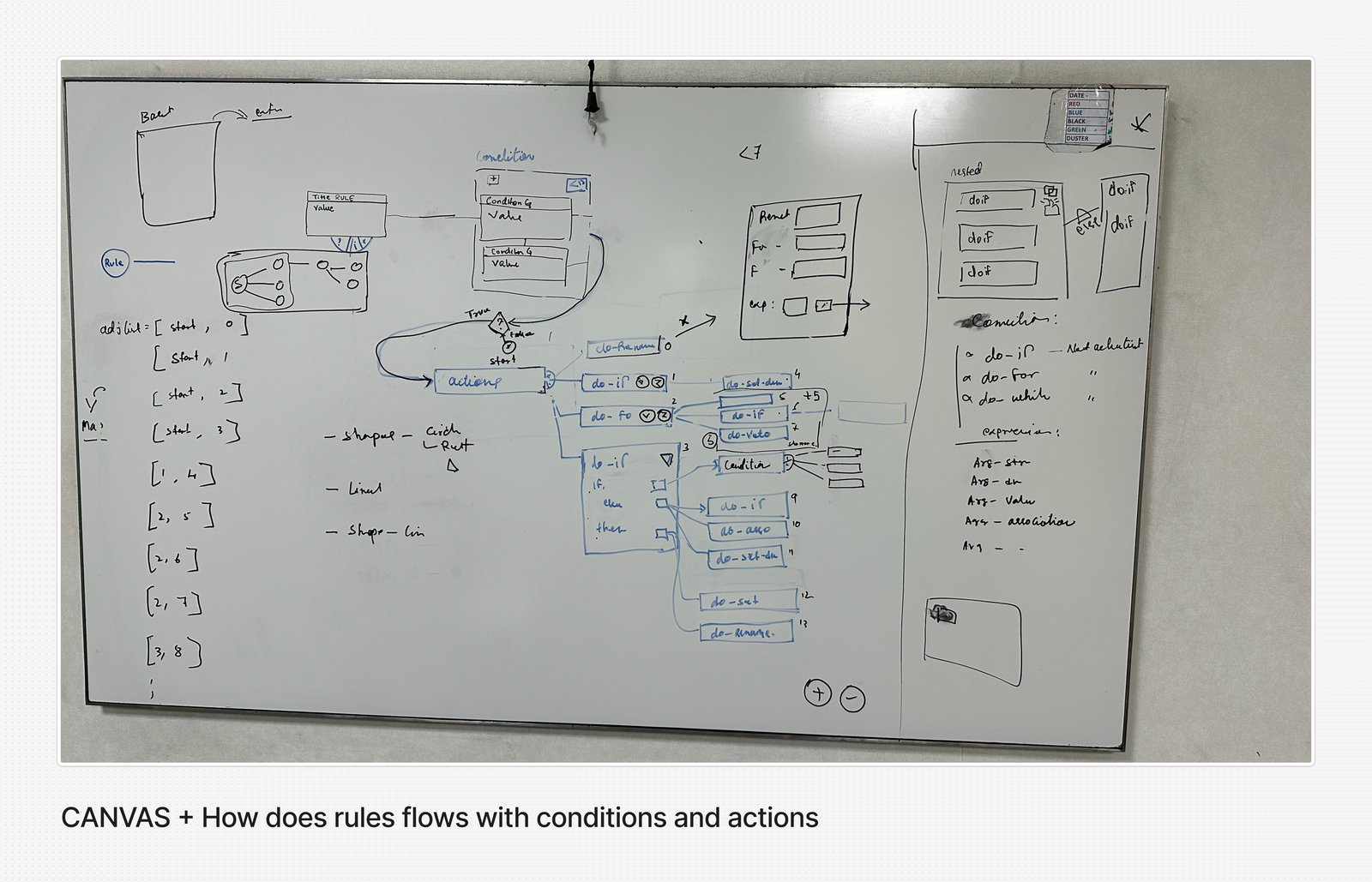
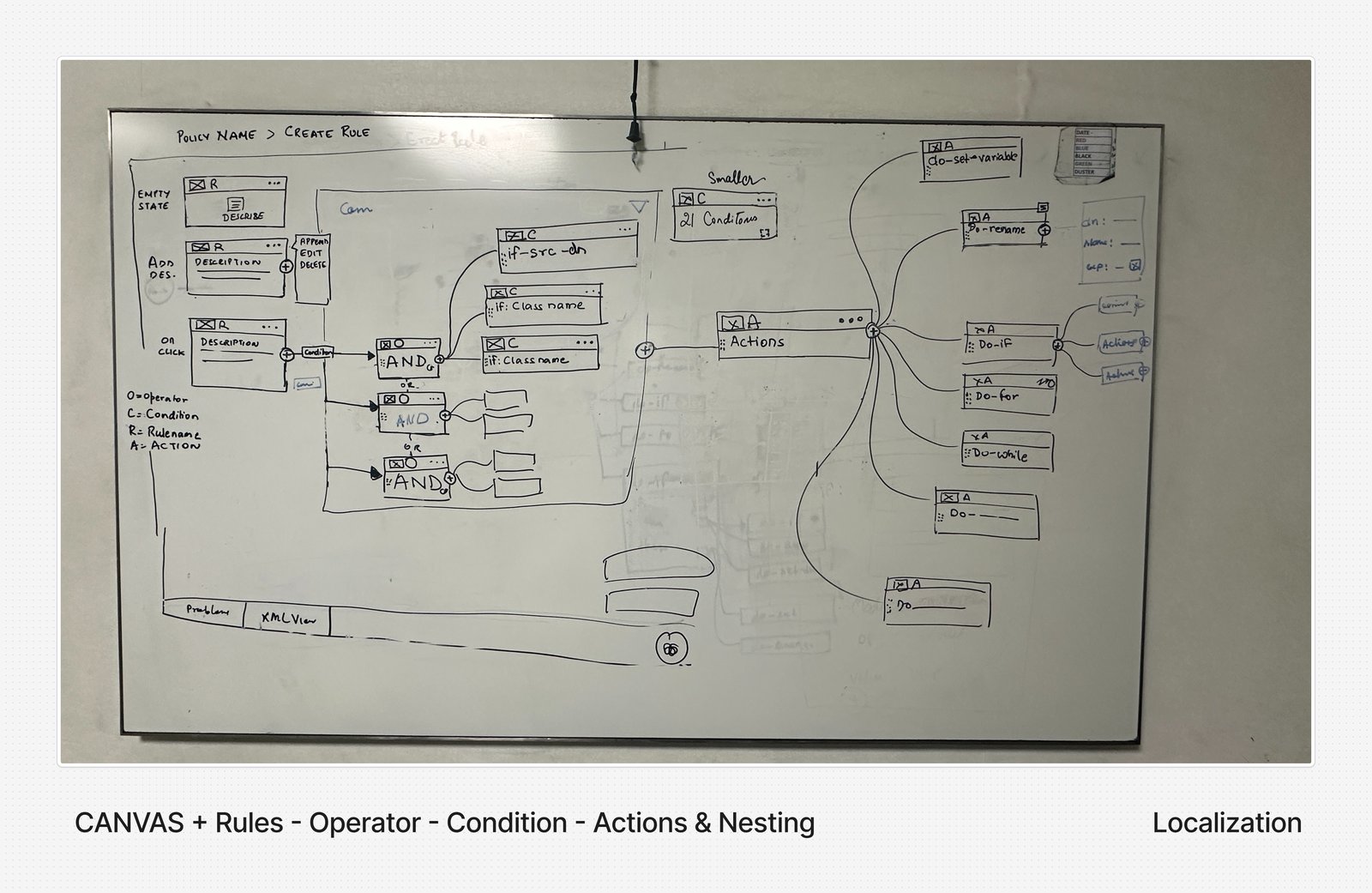
Whiteboard to structure
From sketch to flow — defining how a user moves through rule creation without ever touching XML unless they choose to.
One canvas. Every function. Nothing lost.
The idea was simple and radical: the user never leaves the canvas. Select a node — it highlights. Add conditions, build actions, edit rules — all in place, without a single modal interrupting flow. The policy structure stays visible at all times, so administrators always know where they are and what they're changing. A single pane of glass to build and edit policies end-to-end.
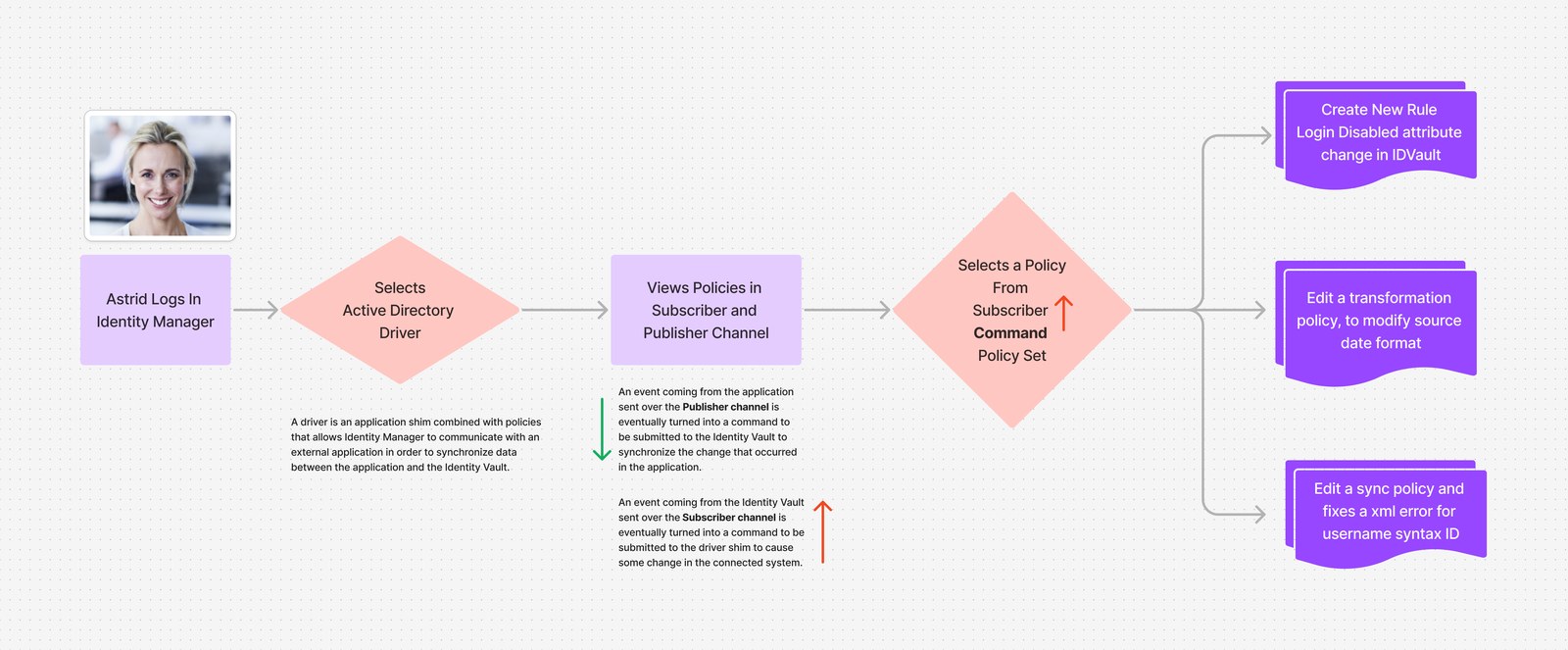
The happy path — confirmed
Tested with 9 enterprise participants at OTW2025 Innovation Lab in Nashville. The redesigned flow mapped cleanly to how administrators actually think about policy management.
Research leadership
I planned and facilitated enterprise usability validation sessions to measure confidence, workflow clarity, and task success. The results confirmed strong adoption potential and eliminated critical usability risks before engineering scale-up.
What worked well
- Participants quickly understood the Canvas View interaction model.
- Rule building felt predictable and easier than XML workflows.
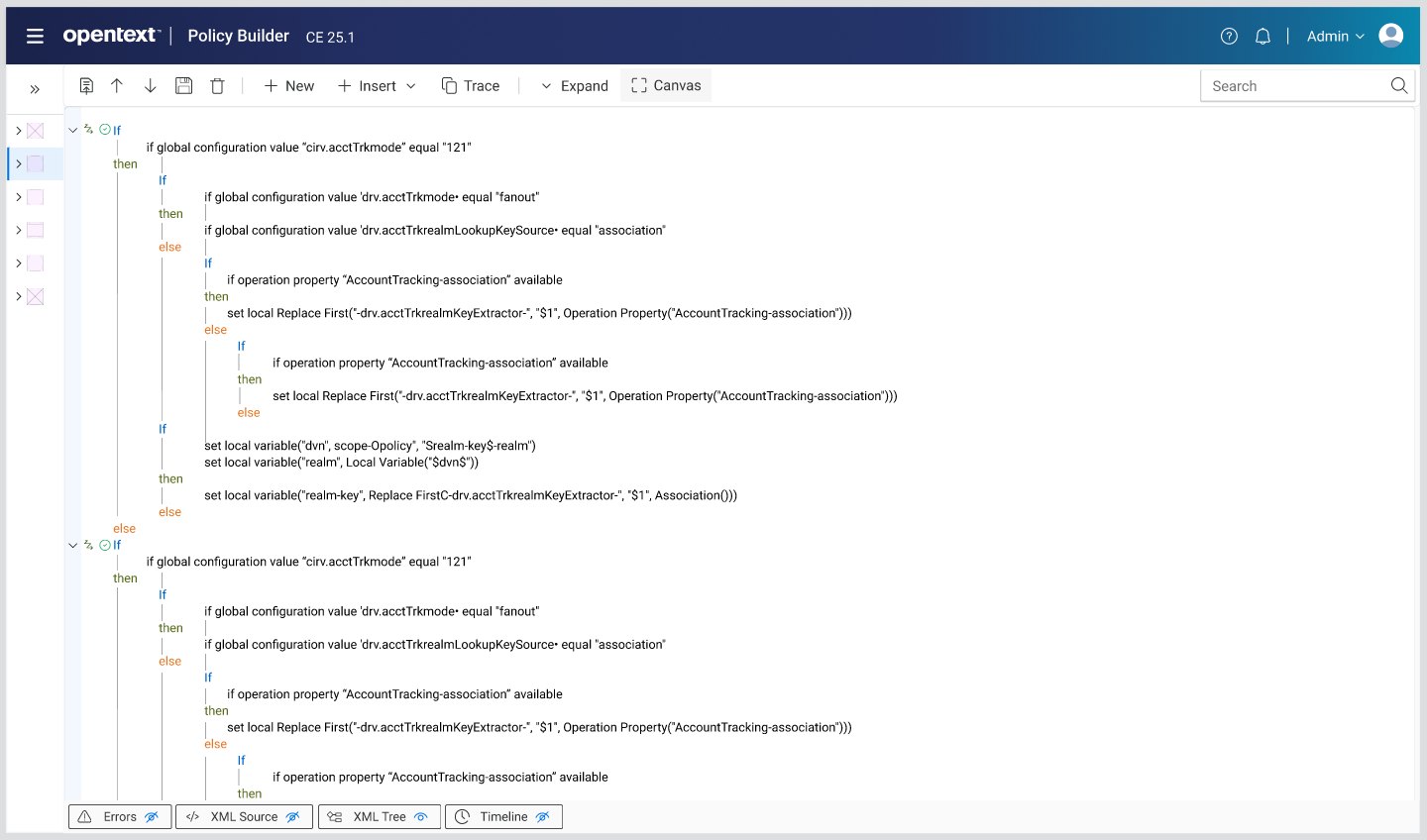
- Multi-view toggle (Canvas / Tree / Source) improved confidence.
- Users stayed oriented without modal interruptions.
What we improved next
- Clarified node labeling for complex policies.
- Improved guidance for first-time rule creation.
- Added microcopy to reduce fear of breaking production rules.
- Strengthened error messaging for invalid conditions.
"I'm really excited for this to go live. This blows the socks off IDM."— Partner, TriVir · OTW2025 Innovation Lab
"Oh, snap. Oh, wow. I was not expecting that — that's great... That's pretty slick."— Enterprise participant reacting to Pseudo Code View
"It was a pleasure to work with Sandeep in preparing the Identity Lifecycle Manager Policy Builder usability test for this year's Innovation Lab at OTW2025... As a result of Sandeep's contributions, the test and preparations ran very smoothly. We were able to collect feedback from 9 customers and partners during the Lab. All of these participants left feeling very happy to impact product designs through their feedback."
— Shane Melton, Product Leadership Team · OTW2025 Innovation Lab ReportFull Case Study
Wireframes, research findings & design process
The complete PDF includes all iterations, usability test methodology, participant data, and the full design rationale.